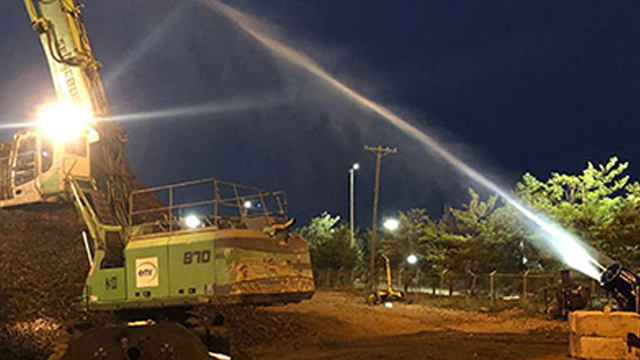
What is Dust Control and Why Does it Matter?
Dust is one of the most common challenges across industrial sites, but also one of the most underestimated. Left unmanaged, it can trigger a long list of operational and safety concerns. This includes harming workers, damaging equipment, creating regulatory risk, adding time and cost, straining community relations, and more. Dust control and dust suppression is the science and strategy of controlling airborne particles before they spread. Advanced dust suppression systems use atomized water droplets to bind with airborne particles, forcing them to settle and ultimately preventing harmful exposure. Just as awareness increases and technology advances, so do expectations for safer, more sustainable, and more efficient work environments.
Why is Dust Suppression Important?
Smart dust suppression solutions turn common dust challenges into operational advantages like lower labor costs, more predictable project timelines, lower health risks, and more.
- Worker Health & Safety: Protect crews from respirable silica dust (PM10, PM2.5), linked to serious respiratory illnesses.
- Regulatory Compliance: Meet strict OSHA, MSHA, and EPA standards for air quality and dust exposure.
- Operational Efficiency: Prevent downtime caused by poor visibility, equipment failures, or clogged systems.
- Community Relations: Reduce visible dust plumes that generate community concerns, inspections, and reputational damage.
- Cost Management: Avoid fines, reduce labor costs, and extend equipment lifespan.
Dust Suppression Methods: Why Water-Atomizing Dust Suppression?
No two sites face the same dust challenges. At HKD Blue, we engineer custom water-atomizing dust suppression solutions targeted to your jobsite’s unique challenges. Born problem solvers, our mission began when a port in Quebec City had a persistent dust problem that had proven difficult to resolve. As industry leading snowmakers, we drew on HKD Snowmakers’ 35 years of water atomization expertise, bringing a fresh perspective and engineering something entirely new.
To this day, we engineer dust suppression technology for the most extreme climates. While there are many ways to tackle dust, HKD Blue’s water-atomizing dust suppression technology is the most durable. It’s also precise, water-efficient, and engineered for long-term ROI.
Why Water-Atomizing Dust Suppression?
HKD Blue’s water-atomizing dust suppression is more effective than traditional spraying because it creates tiny droplets (10–100 microns) that closely match the size of airborne dust particles, making collisions and binding far more likely.
Unlike hoses or sprinklers that mostly soak surfaces and waste water, atomized mist lingers in the air to capture dust where it forms, using a fraction of the water and avoiding runoff or mud. These fine droplets are less affected by wind, can be projected and controlled over large or targeted areas, and are especially effective at trapping harmful respirable dust (PM10, PM2.5), helping sites meet safety and environmental standards while reducing labor and water costs. These systems often leverage fog or misting cannons to deliver targeted, water-efficient coverage over large areas such as quarries, ports, or demolition sites.
Alternative Dust Control Methods
- Water Spraying and Water Trucks: This method involves spraying water on haul roads, stockpiles, or demolition zones. While simple, this approach is often inefficient: it requires constant reapplication, ties up labor, and wastes thousands of gallons daily. Additionally, it creates muddy conditions that slow operations.
- Chemical Dust Suppressants: Polymers, surfactants, and binding agents can form a crust that prevents dust from lifting. These products can provide longer-lasting results in certain applications but often come with trade-offs: recurring costs, environmental concerns, and complex handling requirements.
- Enclosures and Physical Barriers: Walls, fences, and containment structures can reduce windblown dust in specific areas. While effective for localized operations like indoor demolition or transfer points, these structures can be expensive to build and impractical for large, open sites.
- Ventilation and Filtration Systems: In enclosed environments—like recycling plants, steel production facilities, or indoor demolition—mechanical ventilation systems can filter airborne particles. These systems can be highly effective but require significant upfront investment and ongoing maintenance.
What Makes Dust Suppression Effective?
While each industry and each jobsite requires a unique dust management plan, there are five core tenets driving effective dust control:
- Water-Efficiency: Efficiency is key. Use the least water possible while maintaining control.
- Targeted Coverage: Use precision systems to control dust exactly where and when it’s needed.
- Automation: Reduce labor costs, improve worker safety, and ensure consistently efficient performance.
- Adaptability: Advanced systems designed for extreme climates, indoor/outdoor use, and changing site conditions.
- Reliability: Equipment built for long-term use and there is a dedicated service team ready to train and support along the way.
Industries That Require Dust Control
Whether it’s a scrapyard looking to mitigate emissions, a mine needing to avoid costly fines, or a demolition crew seeking to replace dangerous manual labor with safer technology, advanced dust control solutions are critical.
Dust Suppression for Mining
Mining operations require dust suppression and evaporation technology at various locations of the mine site. This includes drilling and blasting to crushing and material handling. Tailings water is one byproduct of the mining operation and HKD Blue machines are highly effective in evaporating the residual water.
Dust Suppression for Construction & Demolition
Demolition activities often create massive uncontrolled dust challenges as the contractor is often processing various materials for recycling, such as concrete, asphalt, steel, aluminum, and dirt. Specialized demolition tools such as concrete pulverizers, shears, or grapples that dismantle the building create dust emissions in specific locations. The HKD Blue Geyser center nozzle is the perfect tool in this situation. Huge throw, oscillation, and a wide range of flows.
Dust Suppression for Aggregates & Quarries
Crushing, transporting, and stockpiling aggregates generate significant airborne dust. Effective suppression starts at the feedstock—the material headed for crushing—where a fine mist prevents over-saturation on conveyor belts and reduces dust at the crusher impact point. Further downstream, stacking conveyors build large aggregate stockpiles that also release fine particles into the air. HKD Blue dust suppression systems control this dust with precision atomization, durable equipment, and reliable performance designed for continuous quarry operation.
Dust Suppression for Steel Production
Steel mill operations emit fugitive dust, exasperated by the handling of raw bulk materials such as Petroleum Coke, Iron Ore, and Manganese. The transfer of these materials between ships, rail cars, hoppers and loading areas, adds to the dust problem. HKD Blue engineers machines to overcome these challenges, while also mitigating dust emissions from Slag dumping areas. The fugitive dust byproduct of the smelting process–when that material is dumped from the Pot Carriers–requires smart dust suppression and misting technology.
Dust Suppression for Metal Recycling
Metal recycling facilities across the United States rely on HKD Blue machines to control dust and smoke. Scrap metal piles collect dirt, dust, and rust and create significant dust emissions when handled in large quantities by scrap grapples and loaders, especially when transport is required betweeen trucks, rail cars, or vessels.
Dust Suppression for Waste & Recycling
Waste Transfer stations handle municipal waste and debris from construction and demolition (C&D) activities. These facilities use cannons with lower flow rates to populate the air with a dust-fighting atomized mist, without saturating the material that needs to be handled or recycled. Elevated units are often most effective, as the mist stays suspended in the air longer, increasing its ability to fight dust.
Dust Suppression for Ports & Bulk Handling
HKD Blue units are used at port facilities for handling bulk products in large quantities. When a ship is at the port, cranes and loaders are running 24/7 to get the ship unloaded and the product heading to its destination. The more material being moved at once, the more dust is created, demanding HKD Blue equipment to suppress fugitive emissions. Some of the primary products handled that required dust suppression include Pet-Coke, Manganese, Coal, Fly Ash, Bauxite, Aggregates, Shredded Iron, Pig-iron, and iron-ore. The machine of choice for this type of facility is generally a Self-Contained option (V-400 GT). This allows them to pump water directly from the river.
Dust Suppression for Earthwork & Remediation
Former power generating stations, manufacturing plants, or industrial sites often leave contaminated material or soil that must be remediated before the site can be reused. Often called “Brownfields”, these sites must mitigate the emissions of contaminants during excavation activities.
The HKD Blue Advantage
HKD Blue engineers the most powerful dust control cannons and advanced dust suppression systems. Founded on innovative problem solving and HKD Snowmakers’ 35+ years of atomization expertise, we don’t just sell equipment, we partner with you to create efficient, economical, and effective solutions for your site’s unique challenges.
Our promise:
- Superior Engineering: Proven atomization technology.
- Immediate ROI: Reduced labor, fines, and downtime.
- Unmatched Support: Training, service, and a dealer network that keeps your equipment running.
Ready to Control Dust More Efficiently?
When standard solutions don’t work, we engineer ones that do. Explore our dust suppression cannons or connect with our team to find the right solution for your site.